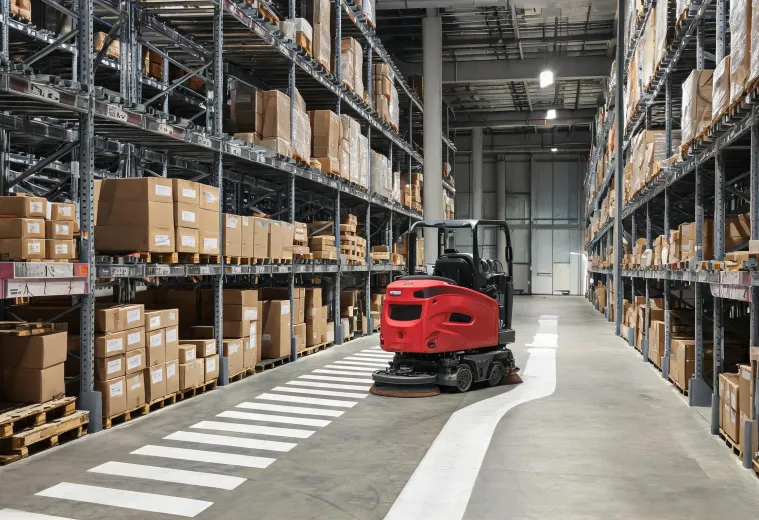
Warehousing
Fit cleaning between movements
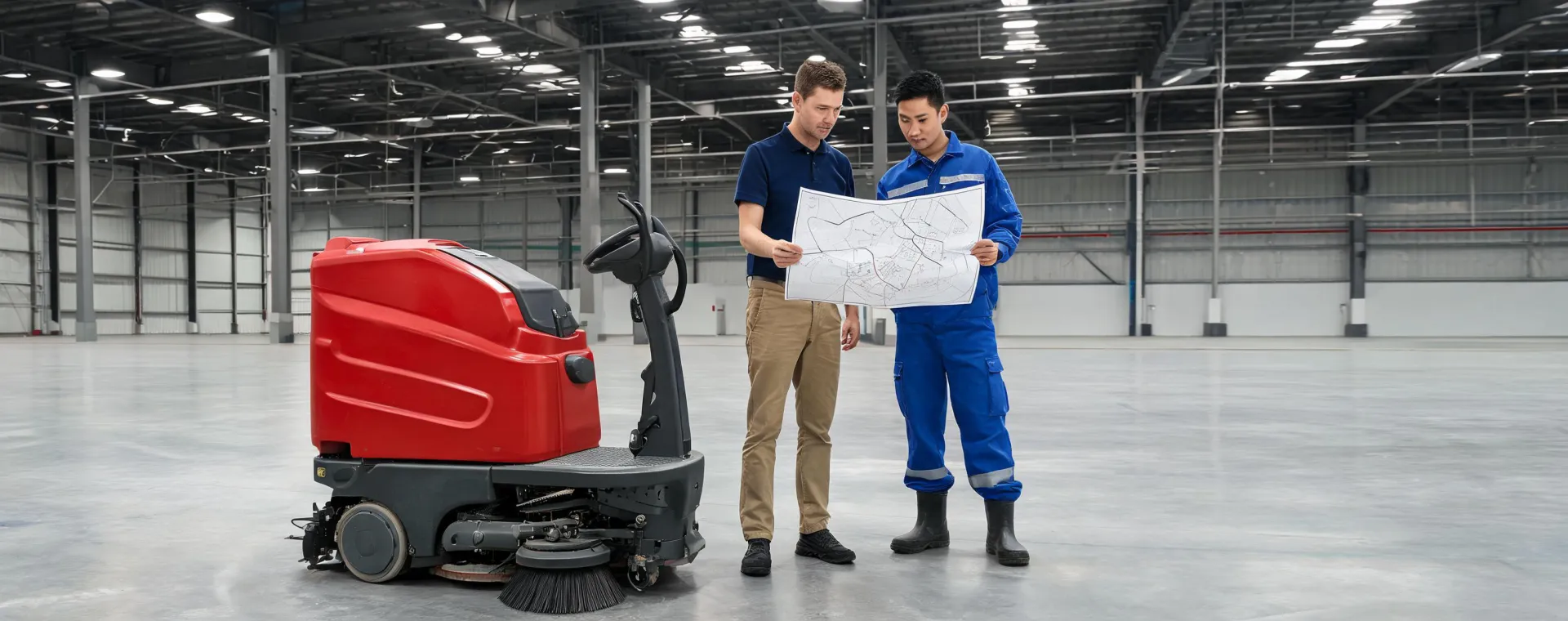
Record pallet debris, end-cap turns, dock thresholds and the time available between replenishment waves. Trial pickup through the turns where speed and water recovery are most likely to vary.

Different floors, different operating realities
A productive result depends on more than area. Traffic separation, soil, finish, drainage, hygiene rules and reopening time change the machine brief from one facility to the next.
Explore Working FloorsHorizontal field notes
Record pallet debris, end-cap turns, dock thresholds and the time available between replenishment waves. Trial pickup through the turns where speed and water recovery are most likely to vary.
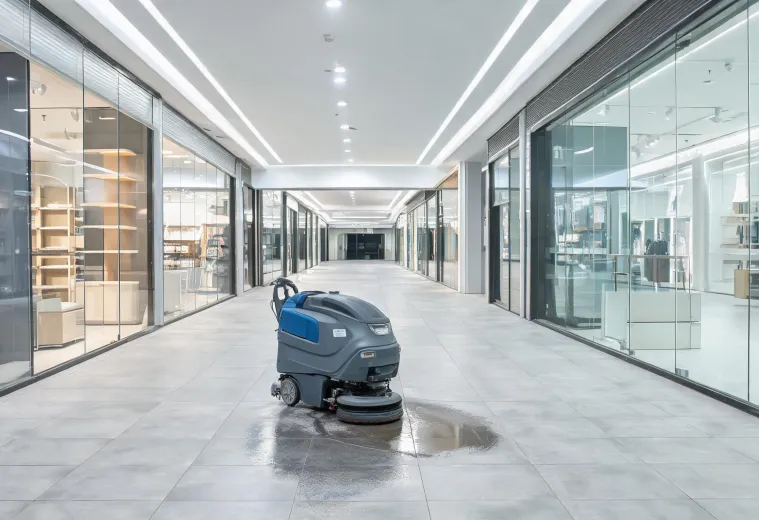
Evaluate maneuvering around fixtures, acoustic expectations and dry pickup near customer paths. The route test should include polished surfaces and transitions, not only an open demonstration patch.
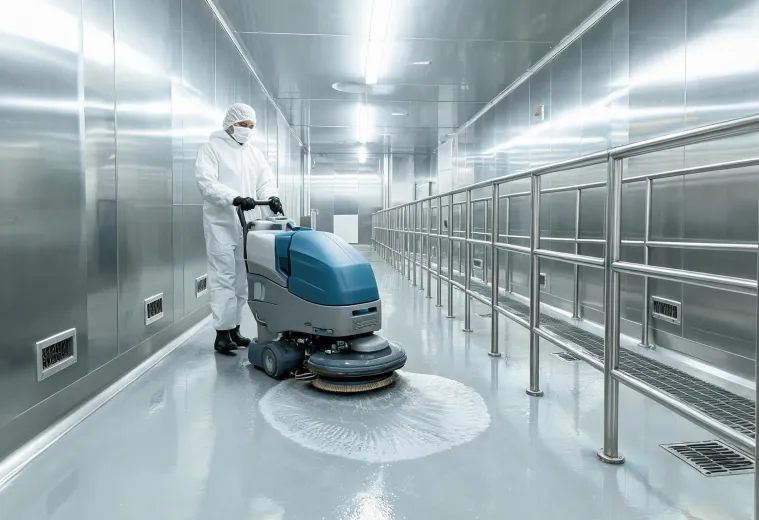
Confirm compatible chemistry, floor condition, drain rules and cleaning-zone separation. Equipment selection does not replace the site sanitation plan or validated process for the production environment.
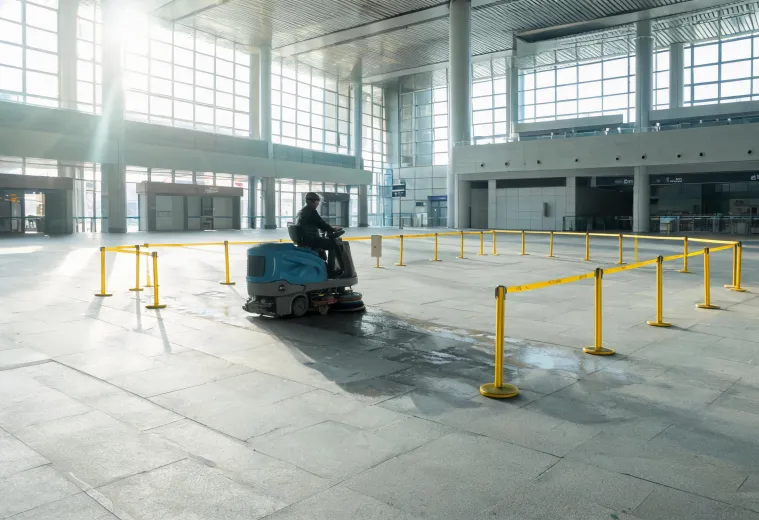
Map pedestrian flows, ramps, lifts and emergency routes. Noise, sightlines and safe separation can set practical limits even when the floor area suggests a larger machine.
Scenario cards
Bring the narrowest turn, most sensitive surface and strictest reopening condition into the demonstration brief.