Can the operator see?
Check deck edges, traffic approaches and the clean path from the normal working position.


Design begins at floor level
The brand position in this site is practical: observe how the operator moves, how the machine reaches the edge, how solution is recovered and how maintenance is performed between shifts. Industrial design becomes useful only when those details remain understandable on a busy floor.
A design brief, told through work
A floor-care machine sits inside a larger operating system. Deliveries still move, staff cross the cleaning zone, production windows close quickly and the floor finish may react to the wrong pad or chemical. That is why the first useful artifact is a route map rather than a product claim.
The map identifies turns, thresholds, congestion, fill points and the required reopening condition. From there, the team can discuss deck geometry, solution control, recovery and operator visibility. A representative demonstration then turns assumptions into observations that can be recorded.
“The most revealing specification is often the place where the machine must turn, refill or be cleaned at the end of a shift.”Comac site-planning principle
Check deck edges, traffic approaches and the clean path from the normal working position.
Measure turning pockets, doorways and transitions with the machine in working configuration.
Inspect recovery through straight runs, curves and the final part of the test route.
Assign tank, blade, brush and charging checks to roles that exist on every shift.
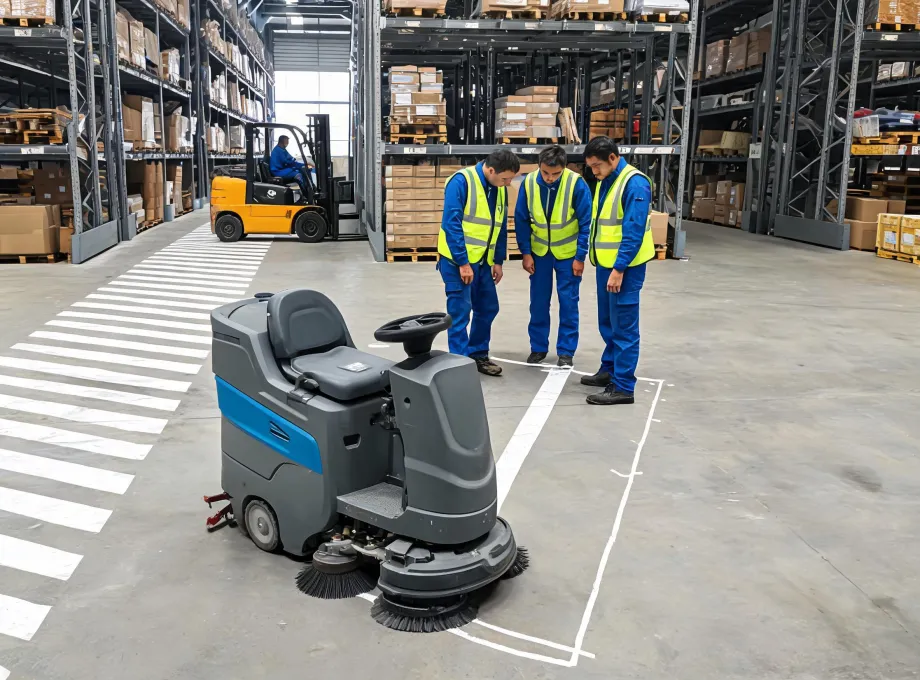
Shared-floor responsibility
Operators need safe sightlines and realistic time. Facilities managers need a repeatable acceptance method. Production and logistics teams need route windows that do not create unplanned conflict. Procurement needs a scope that can be compared without hiding consumables, training or maintenance access.
A documented trial gives those groups the same evidence: the selected patch, the setup, the passes completed, the pickup condition and the observations made after reopening. It also exposes limits. A machine cannot compensate for incompatible chemistry, unprotected traffic, damaged floors or neglected recovery components.
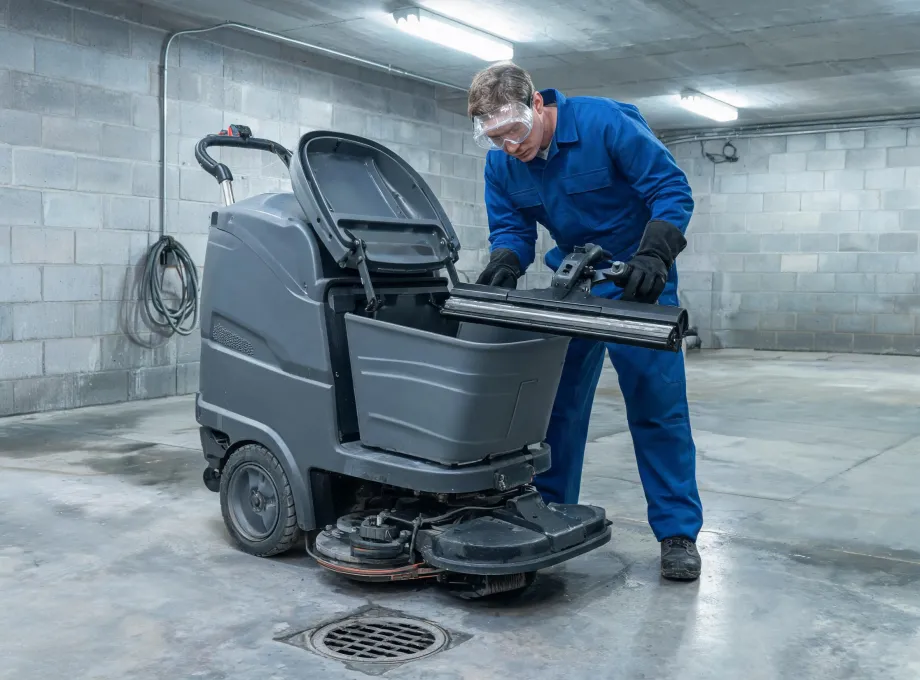
Knowledge stays with the shift
Controls should be taught in the context of the route. Daily care should be visible on a short checklist. Service records should describe symptoms and verification, not only parts replaced. These small disciplines help a facility distinguish application issues from setup, wear or maintenance conditions.
Final model claims, certifications and performance figures must be checked against the documentation supplied for the selected machine and market. This site does not replace the product manual, site risk assessment or local wastewater and electrical requirements.
Describe the route, finish, soil and available window. We will help structure the next equipment conversation.